
A/C Leak Detection & Pressure Testing Brisbane
Locating complex refrigerant leaks with professional-grade testing methods—no guesswork.
Our Service
A/C Leak Detection & Pressure Testing
Refrigerant loss is one of the most common issues in commercial vehicles, yet it remains the most frequently misdiagnosed. Constantly topping up gas without sealing the leak is a waste of your operational budget. We utilize industry-standard, professional leak detection methods to accurately track down escaping gas in fleet vehicles, transport trucks, and heavy earthmoving equipment.
Our Core Focus
Nitrogen pressure testing
High-pressure structural testing to find hidden cracks in lines and evaporators.
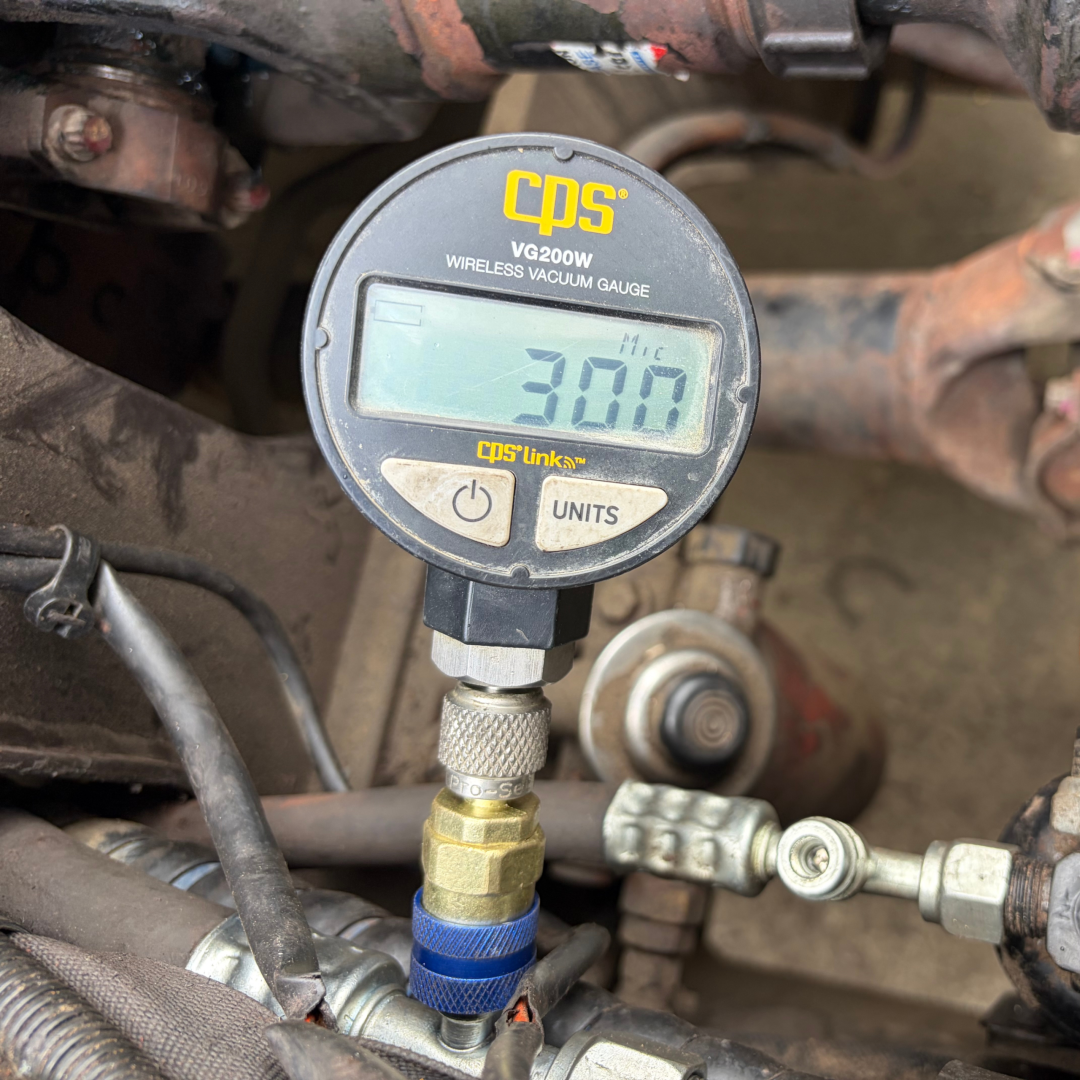
Vacuum decay testing
Deep evacuation monitoring to verify total system sealing and structural integrity.
UV dye leak detection
Precision ultraviolet tracking to spot slow, intermittent leaks over time.
Refrigerant loss diagnosis
Full audit of O-rings, service valves, seals, and hose crimps.
AREAS WE SERVE
Every Service, Across All Locations
We don’t restrict our services by location. Our fully equipped mobile service vehicles cover our entire footprint, providing every single service listed above across: Brisbane (Northside & Southside) • Port of Brisbane • Gold Coast • Ipswich • Toowoomba • Lockyer Valley • South East Queensland.
faq
Frequently Asked Question
Why can't you just add more gas to my A/C system instead of doing a leak test?
Under Australian environmental law (ARCTICK regulations), it is strictly illegal to top up or “regas” an automotive air conditioning system that has a known or suspected refrigerant leak. More importantly for your business, pouring expensive gas into a leaking system simply wastes your operational budget. We find the physical leak, repair it permanently, and then legally recharge your asset.
What is the difference between nitrogen pressure testing and a basic vacuum test?
A vacuum test pulls air out of the system, which can cause rubber hoses or seals to collapse inward, temporarily hiding a leak. Nitrogen pressure testing pumps dry nitrogen into the system at high pressure. This mimics real-world heavy machinery operating conditions, forcing weak O-rings, cracked aluminum lines, or pinholes in the evaporator to reveal themselves instantly under load.
How long does it take to locate a hidden or slow refrigerant leak?
Most physical leaks can be completely isolated within 30 to 45 minutes using our advanced electronic sniffers and high-pressure nitrogen testing. For incredibly slow micro-leaks that only reveal themselves over weeks of heavy structural vibration, we introduce a specialized UV dye into the system to map out the escaping oil paths under ultraviolet light.
What are the most common leak points on trucks and heavy machinery?
Because commercial trucks and civil equipment endure continuous structural vibration and dust, the most common failure points are brittle rubber O-rings, chaffed rubber hoses, cracked condenser cores from road debris, and compressor shaft seals. Our comprehensive multi-point inspection checks every single joint, valve, and hose crimp to guarantee no leak is missed.